Autonomous Driving: Why Embedded Expertise Is Becoming the Differentiator
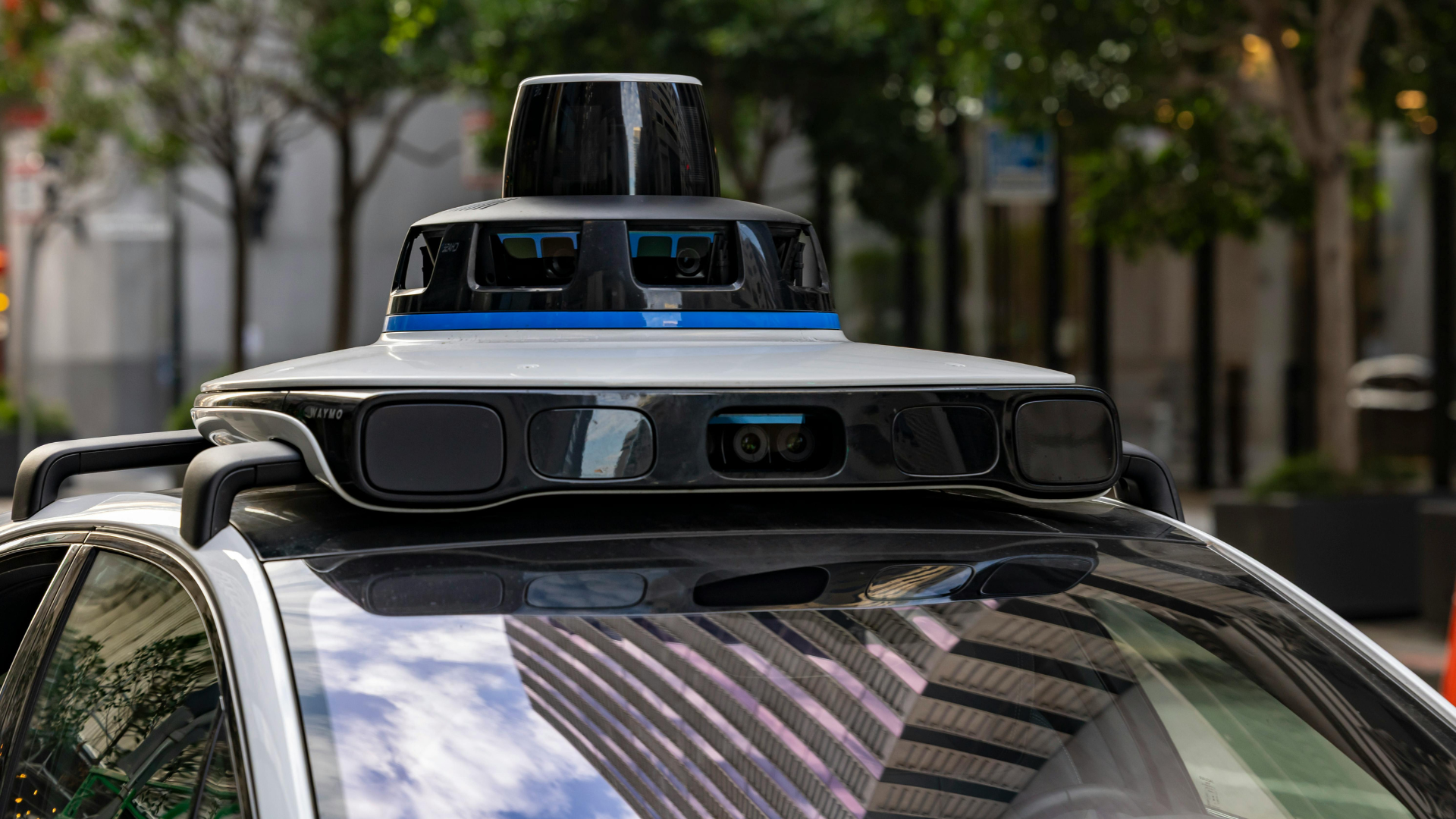
Autonomous driving is no longer about proving that the technology works. The real challenge today is scaling it – turning highly complex systems into something that can run reliably in production, across vehicles, markets and environments (Roland Berger).
For engineers in embedded systems, this shift is critical. Because while AI often dominates the narrative, it is the underlying system architecture that ultimately determines what is actually feasible in a real vehicle.
How do embedded architectures shape the performance of autonomous systems?
At its core, autonomous driving is a real-time, safety-critical system that has to process massive data streams continuously, make decisions within milliseconds and remain stable under constraints like power, latency and temperature. That combination is what makes it such a demanding embedded challenge.
AI models can interpret environments and improve over time – but only if the compute architecture can support them. In practice, that means performance ceilings are rarely defined by the model itself, but by the hardware-software stack it runs on (Roland Berger).
This is exactly why platforms like NVIDIA DRIVE are gaining importance. They are not just chips, but tightly integrated ecosystems that define how perception, decision-making and system performance interact in real-world conditions.
At the same time, user expectations are evolving in parallel. Consumers increasingly value connected features that enhance safety and security, while remaining cautious about how their data is used (Deloitte).
This makes one thing clear: system design is no longer just about performance — it also has to account for trust, security and data governance at every layer.
How do software-defined vehicles change automotive engineering?
The industry is undergoing a broader transformation. Vehicles are becoming software-defined, platform-based systems rather than collections of individual features (KPMG). For engineering teams, this fundamentally changes how systems are built. Instead of optimizing isolated components, the focus shifts to architecture, integration and reusability.
And this is where things get difficult.
Many organizations are still struggling with legacy systems, fragmented ownership and inconsistent data environments. These factors make it significantly harder to move from working prototypes to scalable production systems (KPMG).
This is where the reality of autonomous driving becomes visible: integrating AI models is only one part of the challenge. Ensuring that they run reliably across millions of edge devices is another.
Recent developments underline this shift from concept to execution. In November 2025, major European OEMs introduced advanced embedded system upgrades designed to improve cross-system communication and integration across software-defined vehicle architectures. These systems are built to meet strict safety and cybersecurity requirements, such as ISO 26262, while enabling reliable over-the-air updates and more agile system evolution in production environments (Deloitte / DataM Intelligence).
Why collaboration is becoming a necessity, not a choice
Another clear shift is how automotive companies approach development. The complexity of autonomous systems has reached a point where OEMs cannot build everything in-house anymore.
Instead, we are seeing much deeper collaboration with technology partners, especially in areas like high-performance computing and AI platforms. These are no longer traditional supplier relationships, but long-term co-development partnerships that span hardware, software and data layers (Roland Berger).
For embedded engineers, this means working in increasingly interconnected environments – where system boundaries extend beyond a single ECU, a single vehicle, or even a single company.
The real bottleneck: execution capacity
Despite strong investment in AI, software and next-generation architectures, many companies are hitting the same limit: execution capacity.
The issue is not a lack of strategy. Most organizations already recognize the importance of advanced technologies. The problem is that they do not have enough specialized engineers to implement and scale these systems effectively (KPMG).
That gap is particularly visible in areas like embedded software, system integration and high-performance computing – exactly the domains that sit at the core of autonomous driving.
What does the shift to software-defined vehicles mean for embedded engineers?
The role is shifting from implementation to ownership of complex system behaviour. It is no longer enough to optimize individual components. The focus is increasingly on how entire systems behave under constraints – and how they can be scaled, updated and maintained over time.
At the same time, expectations from the end user continue to rise. Beyond core performance, factors such as service quality, transparency and trust are becoming key differentiators in how vehicles are experienced and evaluated (Deloitte)
This reinforces a broader trend: technical excellence alone is no longer sufficient – systems must also enable a consistent, reliable and user-centric experience.
Where Amoria Bond comes in
As companies accelerate this transformation, access to highly specialized engineers becomes a key differentiator.
Amoria Bond supports organizations in Advanced Engineering by connecting them with experts in embedded systems, electronics and complex software environments – helping teams scale faster and bridge critical capability gaps.
In an industry where system performance, scalability and talent are closely linked, the right expertise is often what turns ambitious technology into real-world deployment.
Get in touch now to schedule a quick call with an Embedded recruitment consultant.
Sources
– Roland Berger – AI in the driving seat
– KPMG – Global Tech Report 2026: Automotive
– Deloitte – 2026 Global Automotive Consumer Study
– Datam Intelligence – Automotive Embedded Systems Market Share Analysis, Growth, Trend, Industry, Market Forecast